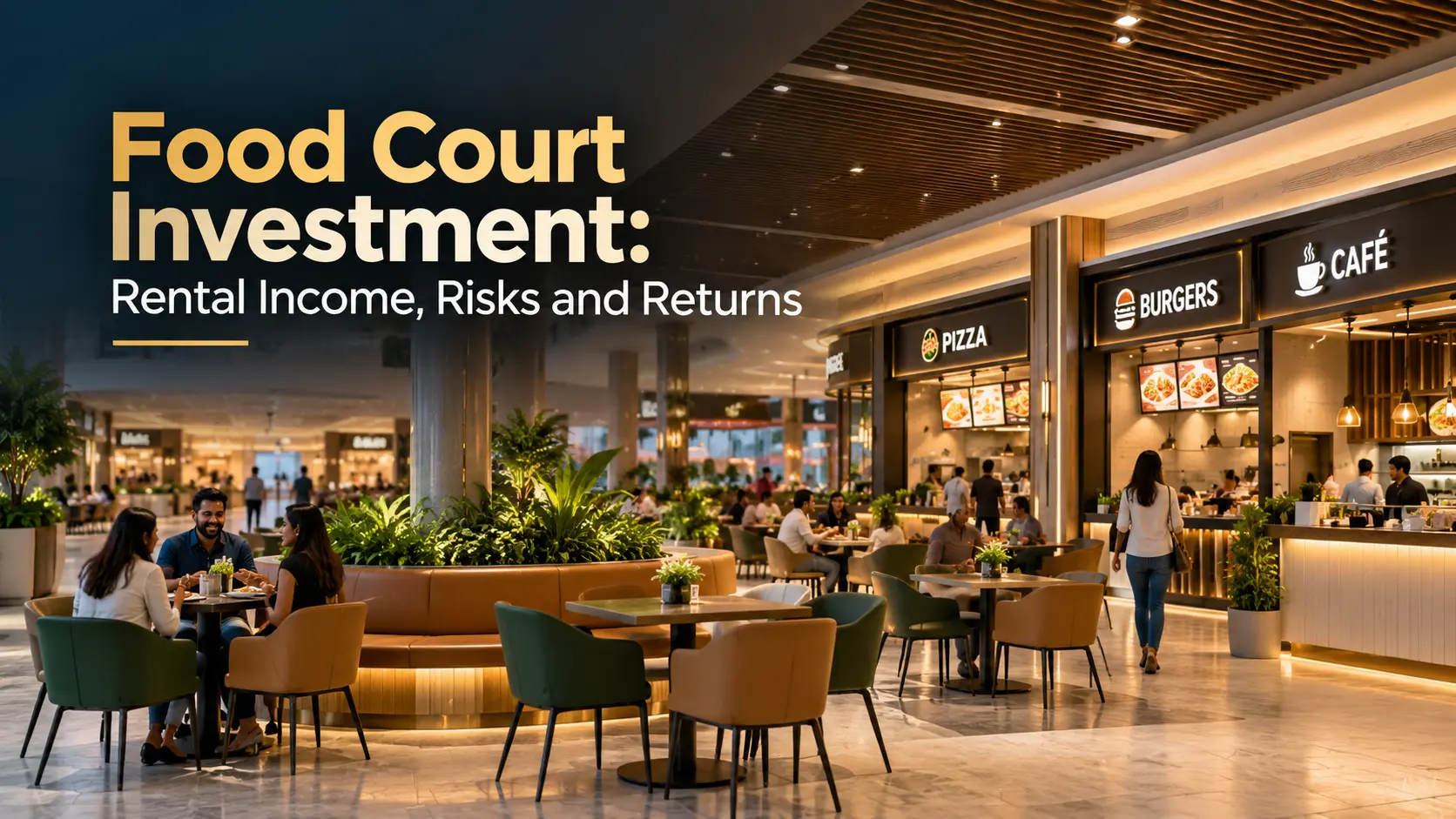
In commercial real estate investments food courts are becoming a popular choice among people. Today malls, shopping complexes and other commercial hubs attract massive crowds every day, food court investment has the potential to generate steady rental income and long-term value.
But before you jump to invest, you must understand how it even works. Even if you are a first-time investor or looking to expand your investments, knowing about the benefits, risks and costs can help you make a smarter choice. The right food court investment can give you attractive returns, but factors such as location, footfall, tenant quality, and lease terms play a major role in its success.
This blog will explain why food courts are popular, benefits and risks of investing along with the key factors to evaluate before investing. We will also tell you the difference between food court and retail shop investments.
Why Is Food Court Investment Becoming Popular?
Recently food court investments have been a favorite of commercial investors as they help generate rental income. It also gives a chance to invest with a lesser budget as compared to other commercial spaces. Here are some reasons why it has been gaining attention.
1. Higher Rental Income Potential
Food court spaces in Moga also give much better rental incomes than many retail shops. If the property is in a good location and has a high footfall of customers, it will generate a steady rental income in the long run.
2. Lower Investment Requirement
A lot of food court units are smaller in size, so they cost less than big commercial shops. This makes them a suitable option for first-time investors or those with a limited investment budget.
3. Less Impact from Online Shopping
Customers can still buy products online, but still prefer to visit a food court to eat and spend time with family and friends. So there’s high demand for food court shops for sale in good locations.
4. Growing Demand for Dining Spaces
Modern malls and mixed-use projects are no longer just shopping destinations. They also offer food, entertainment, and leisure, driving more customers to the food court.
5. Stable Long-Term Tenants
Well-known restaurants and food brands prefer to lease for a longer period of time because having their own kitchen takes a lot of money. This results in a more stable occupancy for property owners.
6. Easy Property Management
Some food court developments offer pre-leased units or developers managed maintenance services. This reduces the amount of work the investor needs to do and makes the property management easier.
Benefits of Food Court Space in Moga
Food court investment can have many benefits for commercial real estate investors. From providing a regular income stream to better growth potential there are many advantages. Here are some advantages of food court investment.
1. Regular Rental Income
The biggest benefit of food courts is that you will earn a monthly food court rental income. A food court located in a prime location will attract many tenants because of the increased demand and also provide stable returns.
2. High Footfall Advantage
Food courts are typically located in shopping centres, commercial hubs, and entertainment areas where consumers frequently visit. Their presence in these locations increases the chance of a good rate of business and also keeps customers coming back to them.
3. Lower Investment Compared to Large Shops
Food court units are smaller in size, and hence can be less expensive to buy from a large commercial showroom. This means that small investors can easily get into the commercial property market.
4. Long-Term Growth Potential
As cities grow and consumer preferences change, so does the demand for restaurants and entertainment venues. A well-chosen food court property will appreciate over time and be an attractive long-term investment.
5. Less Daily Management Effort
Food court investment comes with pre-leased spaces or a professional management staff. That means the investor does not have to worry about managing the daily operations, tenant issues, and maintenance as a frequent worker.
6. Opportunity to Invest in Branded Spaces
Food courts typically have a reputation of having well-known restaurants, cafes, or food chains as tenants. Having well-known brands increases the property’s reputation, attracts more visitors, and gives it stability to the investor.
Risks of Food Court Investment
When you invest in a food court you should not just focus on the benefits. As an informed owner you should also know about the risks that are there. Here is a list of some common drawbacks:
1. Tenant Vacancy Risk
Investment in a food court is dependent on restaurants and food brands staying a long time. If a tenant leaves, or the space remains vacant for months, investors are at risk of losing out on rent.
2. Location Challenges
A food court in a location with low accessibility may not attract enough customers. Even a well-designed building can struggle when it has poor visibility, connectivity, or regular visitor flow.
3. High Competition
Many malls and commercial property investment in Moga have multiple food options. Competition between food outlets can negatively affect business performance and demand for certain food courts.
4. Maintenance and Additional Costs
Investors may need to pay maintenance charges, common area expenses, and other property-related costs. These costs should also be included in the net return on investment when you calculate.
5. Market and Economic Changes
Changes in consumer spending, economic slowdown, or changing food trends can affect food businesses. This may reduce tenant profitability and create challenges for investors in maintaining stable returns.
Factors to Consider Before Your Investment in a Food Court
Food court investment is a crucial step and you will want to be extra careful on your end when researching and buying. There are some factors you should know about to understand if a property can provide good returns in the future or not.
1. Location and Accessibility
Location has the most crucial role in deciding the success of your food court investment. A property that gives easy access, good connectivity and closeness to prime areas will get more visitors and increase business.
2. Footfall Potential
A food court shop in Moga needs routine customers for it to be a success. Before you finalise, check the expected footfall, nearby attractions and visitor patterns to know if the location will support a long-term demand or not.
3. Developer Reputation
Checking the previous record of the investor is a must. An experienced developer will give you better construction quality, proper facilities, and timely delivery.
4. Rental Agreement and Returns
Know about the terms and conditions of the lease, rent and expected returns in advance. Clear agreements help avoid future problems and give better understanding of your income potential.
5. Maintenance Charges
Your returns can also be affected by additional costs like maintenance fees, common area charges, and other expenses. Include all these when you are planning a commercial property investment in Moga.
6. Legal Documents and Approvals
Before you buy a property, always check the ownership and other details. By checking legal records, you will avoid any conflicts in the future and know that your investment is safe.
7. Future Growth Potential
Look at the future development plans around the property. Upcoming residential projects, offices, and infrastructure improvements can increase visitor numbers and improve the long-term value of your food court investment.
Food Court Investment vs Retail Shop Investment
Food court and retail shop investment is an extremely popular way to invest in the commercial real estate market. Both have their advantages and disadvantages. Your option depends on your investment budget, expected return, management effort, and the demand of the market.
| Pointer | Food Court Investment | Retail Shop Investment |
| Investment Cost | Lower investment due to smaller spaces. | Higher investment for bigger units. |
| Rental Income | Good rental potential in high-footfall areas. | Depends on location and business type. |
| Customer Demand | Driven by dining and lifestyle trends. | Driven by shopping needs. |
| Tenant Type | Restaurants, cafes, food brands. | Retail stores and businesses. |
| Maintenance | Often easier with managed services. | More owner involvement may be needed. |
| Vacancy Risk | Depends on food brand demand. | Depends on retail market demand. |
| Growth Potential | Benefits from rising dining culture. | Grows with commercial development. |
| Best For | Passive income-focused investors. | Investors seeking traditional commercial assets. |
What Documents Should You Check Before Investing?
Before investing in a food court space in Moga, make sure that you check the legal documents of the property. Here are some documents to check.
1. Title Deed: Confirms the seller’s ownership of and legal right to sell the property.
2. Sale Agreement: Mentions the purchase terms, payment schedule, and other conditions.
3. RERA Registration: Check whether the project is registered under RERA, if applicable.
4. Building Plan Approved: This document certifies that the building plan has been approved by the concerned authority.
5. Occupancy or Completion Certificate: Verifies the building has been completed to the plans and is ready for occupancy.
6. Lease Agreement: Examine the terms of the lease, rental rate, lock-in period, and tenant responsibilities.
7. No Objection Certificates (NOCs): Check that all the approvals and NOCs required have been obtained from the authorities.
8. Property Tax Records: Make sure that your property taxes have been paid and no pending dues are owed.
Final Thoughts
Food court investment is a great opportunity for investors looking to enter the commercial real estate market. It can offer benefits like regular rental income, lower investment requirements, and long-term growth potential.
Before investing, it is important you check factors like location, footfall, developer reputation, tenant quality, maintenance costs, and legal approvals. A well-planned food court investment in a good location can provide stable income and future value.
Need a food court shop in Moga? Moga City Center is a commercial property investment in Moga that offers spaces with a strategic location and modern facilities.
FAQs
Is food court investment profitable?
Yes, a food court investment can be profitable if the location and customer footfall is good.
How do you calculate rental yield on a food court unit?
You can calculate the rental yield on a food court by dividing your rental income by the property value and multiplying it by 100.
How can investors earn rental income from food court space?
As an investor you can earn income by renting out their food court units to brands.
What are the risks of investing in a food court?
The main risks you should be aware of are tenant vacancy, high maintenance costs, and choosing a location with less demand.
What should you check before investing in food court space?
Check the location, customer footfall, developer reputation and other legal documents before you invest.
Is a food court unit a better investment than a regular retail shop?
It depends on your goals. Food courts offer good demand, while retail shops can be better for traditional commercial investment.
Which documents should you verify before investing in commercial property in Punjab?
Check ownership papers, approvals, RERA details, sale agreement, and other legal documents to ensure a safe investment.
Invest in Moga City Center, one of the best commercial properties opportunities in Moga.